Hey there, reader—imagine scrolling through your news feed on this crisp October 15, 2025, morning, sipping your coffee, and wondering: What's next for the global economy? Will growth pick up, or are we bracing for more turbulence? As we navigate a world still recovering from pandemics, geopolitical shake-ups, and rapid tech advances, the financial landscape is anything but static. From slowing GDP projections to AI's transformative power, 2025 is poised to be a pivotal year where policy decisions, technological leaps, and demographic shifts could redefine prosperity for billions. But don't worry—this isn't just doom and gloom. In this deep-dive blog post, we'll unpack the major economic trends reshaping our world, backed by fresh data from leading institutions like the IMF, OECD, and World Bank. We'll explore what these mean for investors, businesses, and everyday folks like you and me. By the end, you'll have actionable insights to stay ahead. What's your biggest economic worry for 2025—inflation, job markets, or something else? Drop it in the comments, and let's discuss how these trends might play out in your life!
Trend 1: Slowing Global Growth Amid Persistent Uncertainties
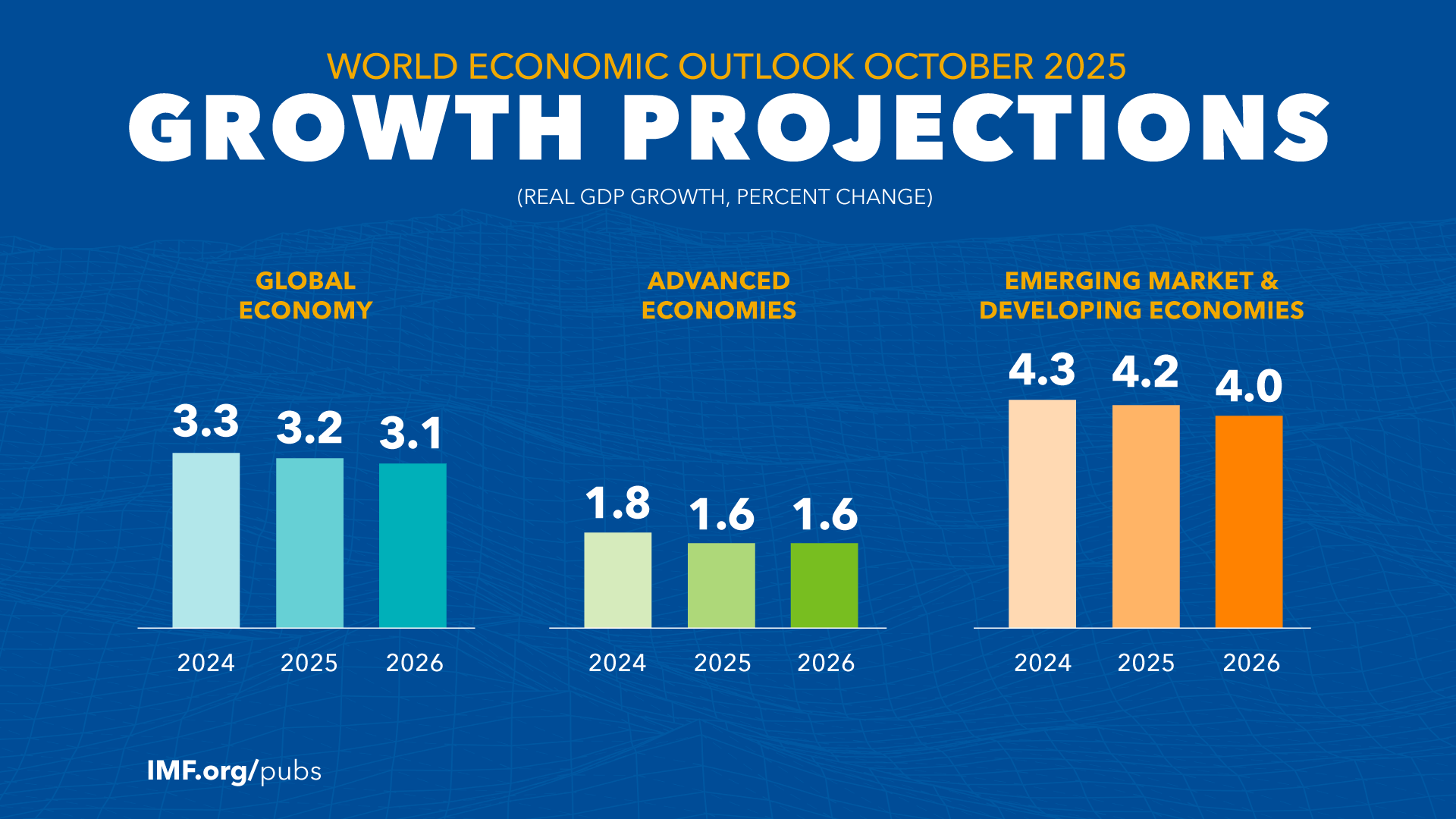
Let's kick off with the big picture: Global economic growth is expected to decelerate in 2025, marking a "tenuous resilience" as the IMF puts it. Projections vary slightly across experts, but the consensus is clear—expect a dip from 2024's 3.3% to around 3.0-3.2% in 2025, with a further slowdown to 2.9-3.1% in 2026. This isn't a crash, but it's below pre-pandemic averages, signaling a "new normal" of subdued expansion.
Why the slowdown? Policy uncertainty tops the list—think U.S. elections, trade tensions, and potential tariff hikes that could fragment global supply chains. The OECD warns that higher tariffs and ongoing geopolitical frictions are weighing on demand, with early stockpiling in 2024 masking underlying weaknesses. Meanwhile, the World Bank forecasts just 2.3% growth, citing downside risks from conflicts and extreme weather.
Regionally, it's a mixed bag: Emerging markets like East Asia and Pacific could see 4.3-4.5%, driven by China and India, while advanced economies lag at 1.6-1.8%. For investors, this means diversification is key—shift toward resilient sectors like tech or renewables. Businesses? Focus on cost efficiencies and supply chain agility. As an everyday reader, keep an eye on your job market; slower growth could mean tighter budgets but also opportunities in growing regions. How might this affect your investments—stocks in emerging markets, perhaps? Let's chat in the comments!
| Region | 2024 Growth | 2025 Projection | Key Drivers |
|---|---|---|---|
| Global | 3.3% | 3.0-3.2% | Policy uncertainty, trade barriers |
| Advanced Economies | 1.8% | 1.6% | Interest rate shifts, consumer spending |
| Emerging Markets | 4.3% | 4.2% | China/India momentum, commodity prices |
| US | 2.9% | 2.3% | Fed rate cuts, election outcomes |
Data sourced from IMF and OECD reports.

Trend 2: Geopolitical Tensions and Trade Fragmentation
If 2024 was tense, 2025 could be a powder keg for global trade. Economists like Ralph Ossa from the WTO highlight how trading relations are now deeply intertwined with geopolitics, leading to fragmentation. Protectionist policies, such as tariffs, outnumbered liberalizing measures 2:1 among G20 countries in 2024, and this trend is expected to accelerate. The OECD and Oxford Economics warn that trade disruption and volatility in prices will define winners and losers, with policy mixes (e.g., U.S. tariffs under a potential Trump administration) reshaping supply chains.
Implications? Higher costs for consumers as firms reroute goods—though firm-level data shows limited rerouting so far, per HBS research. For businesses, expect a volatile year in trade, with opportunities in non-Chinese suppliers but risks from sudden policy shifts. Investors might pivot to domestic-focused stocks or commodities amid uncertainty. Personally, this could mean pricier imports—time to stock up on favorites? What trade issue worries you most—tariffs on tech or food prices? Comment below!
Trend 3: AI and Technological Disruption Redefining Productivity
Here's where things get exciting (and a bit scary): AI is set to add up to $4.4 trillion annually to the global economy by 2040, per Tomas Castagnino. In 2025, generative AI will shift productivity from "more with less" to "better with less," transforming industries. Paul Gruenwald notes AI's impact will be faster than past tech like computers. HBS faculty predict AI reimagining innovation, from idea generation to execution, and even worsening social media misinformation while improving safety.
For businesses, 86% expect AI to transform operations by 2030—think enhanced employee tasks and democratized expertise. Investors: Bet on AI enablers like quantum computing breakthroughs. On a personal level, upskill now—AI could boost your productivity 20-30%. Excited or anxious about AI's role in your job? Let's discuss!

Trend 4: Shifting Demographics and Labor Market Challenges
Demographics are destiny, as Nela Richardson points out: Rapid growth in Africa/Asia contrasts with aging in Europe, leading to talent shortages (63% of businesses report barriers). In 2025, this means more migration flows from low to high-income nations, but HBS warns U.S. immigration crackdowns could harm the economy, ignoring labor needs and inflating costs.
Skills-based hiring is pivotal, per Joseph Fuller—removing degrees opens roles, but adoption is slow, with only modest impacts so far. For readers, this trend signals opportunities in upskilling or relocating. Businesses: Embrace global talent or face shortages. How's your career adapting to these shifts? Share your thoughts!
Trend 5: Climate Change and Sustainability as Business Imperatives
Climate action is no longer optional—George Serafeim notes half of U.S. companies are innovating in green tech, spurred by the IRA. But policy rollbacks could cede leadership to China. PwC megatrends highlight extreme weather's impact on housing and resources. In 2025, expect more violence from scarcity and business pushes for sustainable supply chains.
Implications: Investors eye renewables; consumers demand ethical products. Personally, prepare for higher insurance or energy costs. What's your take on climate's economic role?
Trend 6: Moderating Inflation and Evolving Monetary Policies
Good news: Inflation is cooling, with OECD projecting headline drops from 3.4% in 2025 to 2.9% in 2026. Fed rate cuts could lead to a soft landing, per trends analysis. But volatility from trade wars looms.
For you: Lower rates mean easier borrowing, but watch consumer confidence—it's rising but fragile. Businesses: Plan for stable but cautious spending.
Trend 7: Reimagining Innovation and Policy in a Transformed World
Rima Bhatia calls for rethinking industries amid massive changes. HBS echoes with AI in innovation and volatile trade. 2025 will test resilience—focus on adaptability.
Final tip: Diversify investments, upskill, and stay informed. What's one trend you'll act on? Comment—let's build insights together!


0 Comments